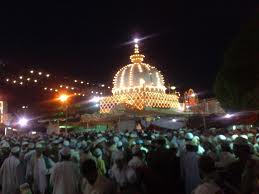
Particularly loved the Tarana at the start and the verses of devotion to Khwaja Gharib Nawaz
Taj Muhammad and Shad Muhammad Niazi Qawwal @ T2F, Karachi
Tou Se Laagi Lagan - Raag Darbari Recital: Taj Muhammad and Shad Muhammad Niazi Qawwal Tabla & Dholak: Usman Ahmed & Faiz Muhammad The Dream Journey sessions The Dream Journey – Discovering musicians across Pakistan (A Non Profit Project) This project will be the sharing of a special experience in which we hope you will want to participate. Some of the musicians are established and famous, others are among the brilliant budding talent that adorns Pakistan’s musical scene. Each of the mehfils has a distinct atmosphere and mood, but there is a common thread. We asked each of the musicians to stay close to their respective inherited musical traditions, allowing the singers an opportunity to present some pieces that are rarely heard today. We are inspired to present the brilliance of this contemporary Pakistani vocal music to a wider audience and seek your financial assistance in making this possible. contributions may be made at: PayPal: goo.gl/4VXB0D
Abdul Rahim Fareedi Qawwal party is at their best in this superb recital.
The tarz (tune), the thaat, the taankari, sargam and on to the pure classical style of recital, with simple traditional instruments, and the wonderfully endearing words such as "mohay raam qasam moray nainan mein khwaja ki sooratiya poor bhaei", in fact from every standpoint this is a very special rendition of the qawwali "Khwaja Ki Joganiya Mein Ban Jaon gi". Each one of the singers seem to be in their prime. It is a small and intimate gathering of a responsive audience who are enjoying every bit of the singing. One is feeding off the other as they flow in waves from one high to another. Every so often the singing becomes gentle, sensitive and soft. Packed with love and devotion for Khwaja Ghareeb Nawaz Hazrat Moinuddin Chisti. This has got to be one of the all time "must hear" in your collection of amazing kalams.
We all owe a debt of gratitude to OSA in UK for preserving the three or four CDs and DVDs that they made of this concert. They have been a source of such pure and unadulterated pleasure for so many of us qawwali lovers and will continue to bring joy to future generations. Please support them by buying their music CDs.
UstadRashid Khan of RampurSahaswanGharana (musical heritage) sings "Kirpa Karo Maharaj" beseeching HazratKhawajaMoinuddinChishti for his blessings and help. Khan's beautiful voice is filled with the Ras that is so important for the words being sung.
Whilst the voice is a gift, his control, years of training, and the riaz deserves commendation and appreciation from all his listeners. For obvious reasons the Rampur andaaz is close to my heart.
The bansuri (flute) element goes well with the singing, however I wish that jhanjhanof the drums wasn't there as it takes away from the classical style.
HazratMoinuddinChishti (also known as GharibNawaz) apparently never wrote down his teachings in the form of a book, nor did his immediate disciples, but he laid the foundations of the Chishtī order in the city of Ajmer in North India. His firm faith in Waḥdatal-Wujūd (Unity of Being) provided the necessary ideological support to his holy mission to bring about emotional integration of the people amongst whom he lived.
The central principles that became characteristics of the Chishtī order in India are based on his teachings and practices. They lay stress on renunciation of material goods; strict regime of self-discipline and personal prayer; participation in Samā' as a legitimate means to spiritual transformation; reliance on either cultivation or unsolicited offerings as means of basic subsistence; independence from rulers and the state, including rejection of monetary and land grants; generosity to others, particularly, through sharing of food and wealth, and tolerance and respect for religious differences.
He, in other words, interpreted religion in terms of human service and exhorted his disciples "to develop river-like generosity, sun-like affection and earth-like hospitality." The highest form of devotion, according to him, was "to redress the misery of those in distress -- to fulfill the needs of the helpless and to feed the hungry."
His paternal ancestry
Mu'īnuddīn Chishtī, son of Ghiyāsuddīn, son of Najmuddīn Zāhir, son of ‘Abd al-‘Azīz, son of Ibrāhīm, son of Idrīs, son of Mūsā al-Kāzim, son of Ja’far al-Ṣādiq, son of Imām Muḥammad al-Bāqir, son of Imām Zayn al-‘Ābidīn, son of Imām Ḥusayn, son of ‘Alī ibn Abī Ṭālib.
Sufiana poetry has been sung in many different ways in South Asia.This pure classical style too is endearing and builds emotions of love and a sense of peace. The singer is beseeching his peer (Hazrat Khwaja Moinuddin Chishti) for his kindness and mercy . It is a short bandish as is quite common in khayal gayeki. With repetition and improvisation Ustad Rashid Khan's recital builds tempo slowly and beautifully evokes his feelings.
Khan became an accomplished singer about twenty years ago, when in his twenties and is acknowledged to be amongst the top of this genre. Pandit Bhimsen Joshi once said about Rashid Khan that he was "assurance for the future of Indian vocal music".
Ustad Shahid Parvez Khan too has helped create a special magic.
It is thought by some that khayal has developed out of qawwali singing and offers a more free form.
I hope you enjoy this as much as I did.
Credit for the musical slideshow: saqibtahir on youtube